
Common Marine Electronics Problems & How to Prevent Them
Marine electronic systems can face problems such as corrosion, power instability, software failures, and communication issues due to harsh maritime conditions. Regular maintenance, system inspections, software updates, and crew training are essential to prevent failures, improve reliability, and ensure safe vessel operations.
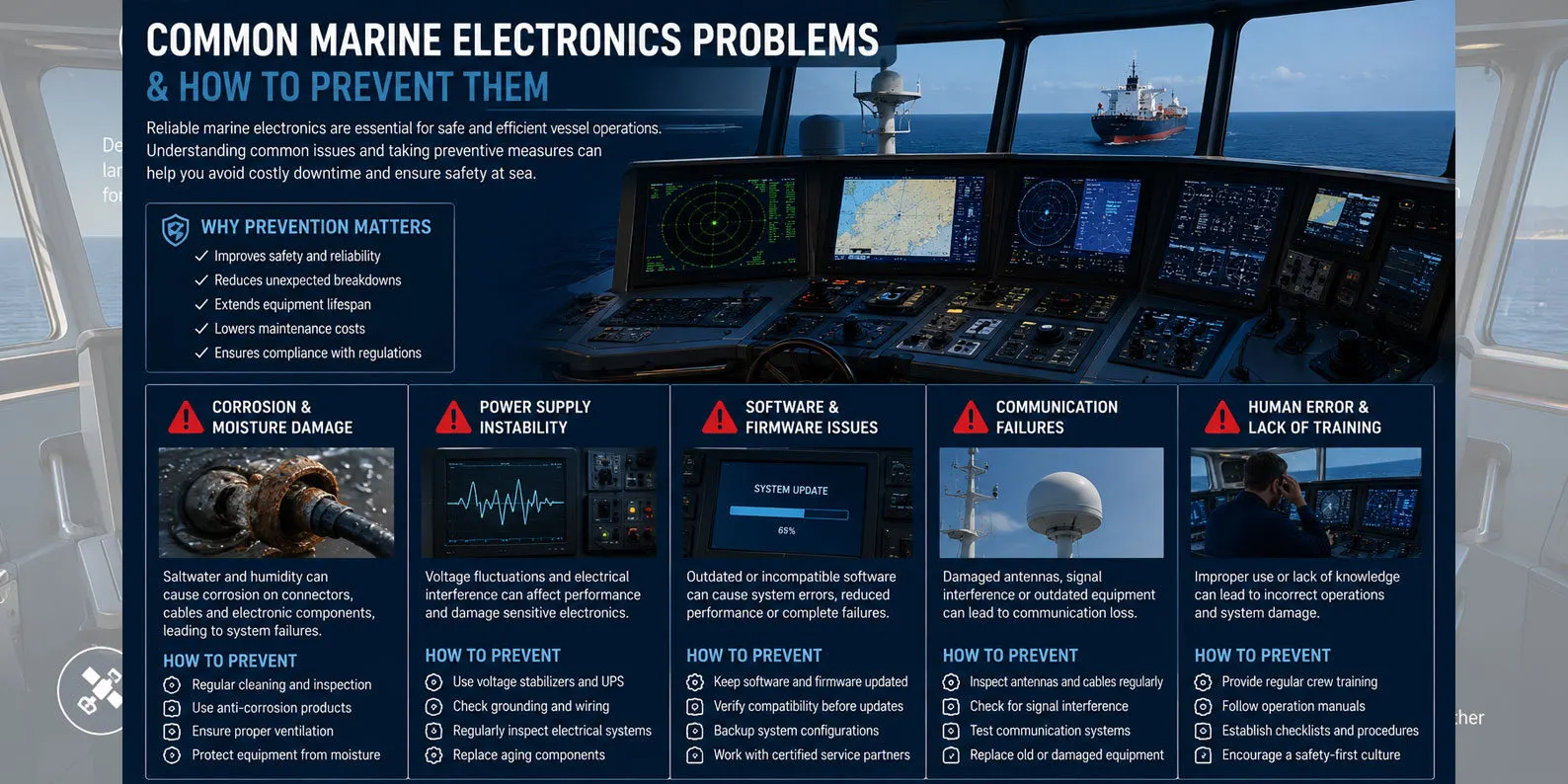
Marine electronic systems are essential for safe and efficient vessel operations. From navigation and communication equipment to automation and monitoring systems, modern ships depend heavily on reliable electronic technology every day at sea.
However, marine environments are extremely demanding. Saltwater exposure, humidity, vibration, power fluctuations, and continuous operation can affect the performance of onboard electronic systems if proper maintenance is not performed.
One of the most common issues is corrosion caused by moisture and salt exposure. Over time, corrosion can damage connectors, cables, and sensitive electronic components, leading to system malfunctions or failures.
Power supply instability is another major problem onboard vessels. Voltage fluctuations and electrical interference can affect navigation systems, communication equipment, and automation platforms, especially when protection systems are outdated or poorly maintained.
Software-related issues are also becoming more common in modern marine operations. Outdated firmware, incorrect configurations, or incompatible software versions can reduce system performance and create operational risks.
Communication failures are another challenge many operators face. Damaged antennas, signal interference, or aging communication equipment can negatively affect coordination and vessel safety during operations.
Preventive maintenance is the most effective way to avoid unexpected failures and costly downtime. Regular inspections, software updates, calibration, and testing procedures help ensure all systems operate correctly and efficiently.
Crew training is equally important. Properly trained personnel can identify warning signs early, respond quickly to technical issues, and operate electronic systems more safely and effectively.
As vessels become more technologically advanced, maintaining marine electronic systems is no longer optional — it is a critical part of modern maritime safety and operational reliability.