
Smart Shipping: How Technology is Transforming the Shipping Industry
Smart shipping uses advanced technologies such as automation, artificial intelligence, real-time monitoring and integrated marine electronics to improve the safety, efficiency and sustainability of ships. These innovations help reduce operating costs, optimize performance, support predictive maintenance and improve environmental compliance across all modern maritime operations.
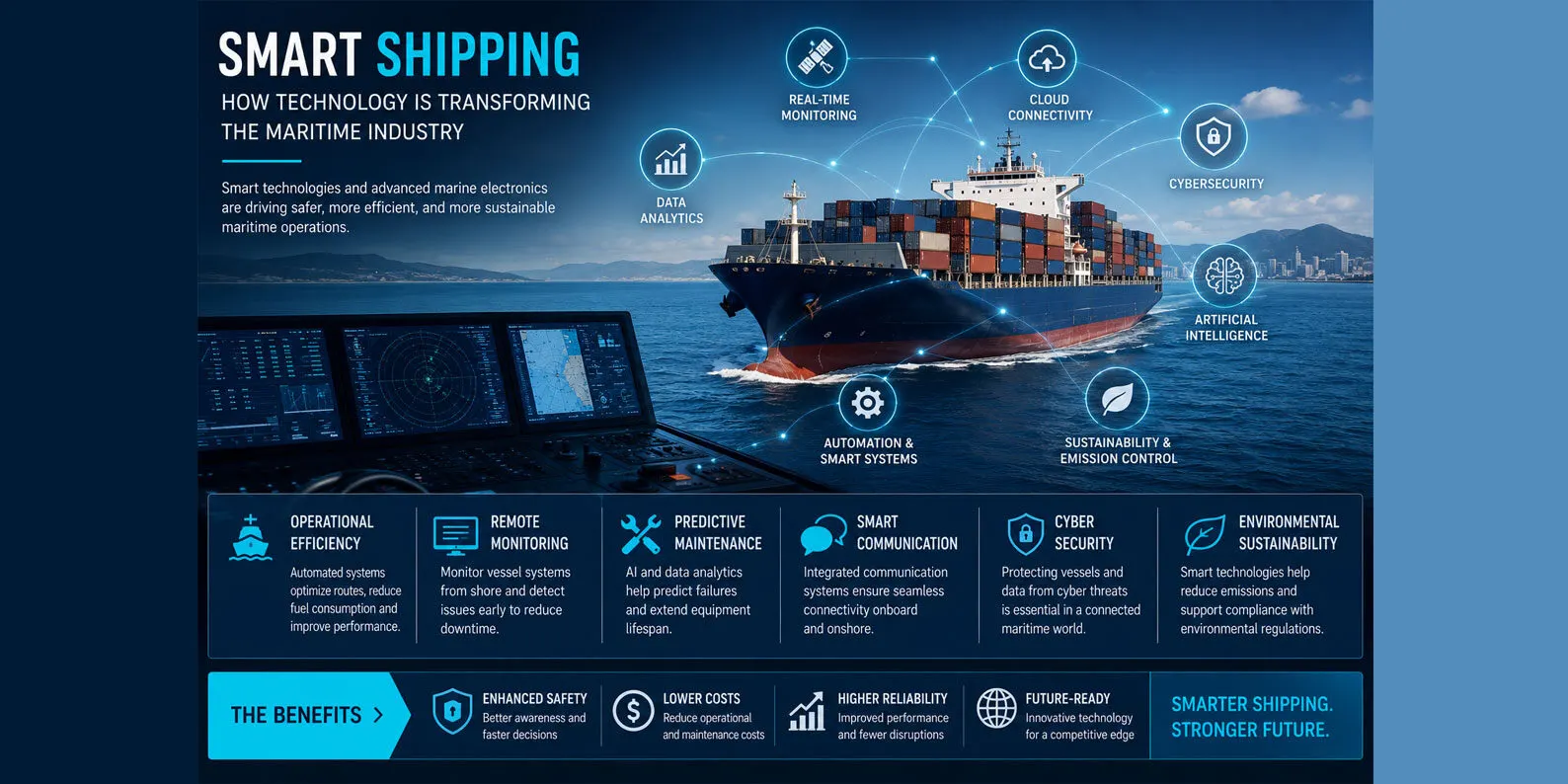
The shipping industry is rapidly evolving through digital transformation and smart technologies. Smart shipping is reshaping the way ships operate by combining automation, real-time monitoring, data analytics and advanced marine electronics to improve safety, efficiency and sustainability.
Modern ships now rely on integrated technologies that collect and process operational data in real time. Navigation systems, communication platforms, automation equipment and monitoring solutions work together to support faster and more accurate decision-making both on board and ashore.
One of the biggest benefits of smart shipping is operational efficiency. Automated systems help optimize routes, reduce fuel consumption, minimize human error and improve overall ship performance. These technologies enable shipping companies to reduce operating costs while increasing reliability.
Remote monitoring is also becoming a key part of modern shipping operations. Technical teams can now monitor ship systems from shore, identify potential failures early, and plan maintenance more effectively. Predictive maintenance technologies help reduce unplanned downtime and improve equipment lifespan.
Artificial intelligence and data analytics are transforming ship management. AI-powered systems can analyze large amounts of operational data to improve performance, support navigational decisions, and identify technical risks before they become major problems.
Cybersecurity is another important aspect of smart shipping. As ships become increasingly connected through digital networks and cloud-based systems, protecting maritime electronic infrastructure from cyber threats is critical to operational security.
Environmental sustainability is also driving technological innovation across the maritime sector. Smart technologies help reduce emissions, monitor fuel efficiency, and support compliance with international environmental regulations.
As the maritime industry moves towards a more connected and data-driven future, smart maritime technologies are becoming essential for safer, more efficient, and more sustainable maritime operations.